— RESOURCES

Problem Gambling Prevention Resources

Strategic Prevention Framework
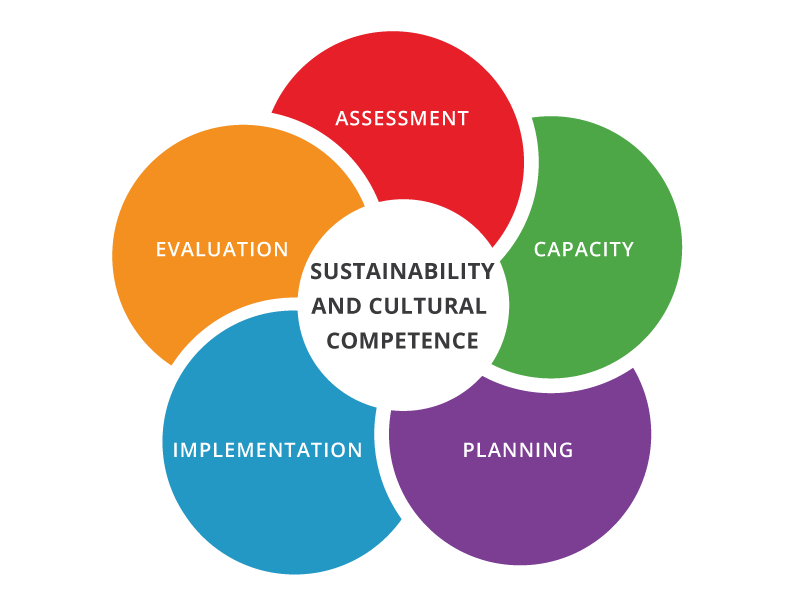
To provide guidance for prevention efforts in the United States of America, Substance Abuse and Mental Health Services Administration (SAMHSA) created the Strategic Prevention Framework (SPF), which includes the five steps of Assessment, Capacity, Planning, Implementation, and Evaluation. The SPF’s guiding principles are Sustainability and Cultural Competence. Following the framework improves the effectiveness of prevention efforts while reducing harms. This also applies to problem gambling prevention. Prevention is prevention is prevention, meaning that the same principles in preventing substance use or other addictive behaviors are the same. For more information on the SPF, click here.

Tips & Tricks for problem gambling prevention

Evidence-based refers to programs and practices that have repeatedly and consistently led to targeted outcomes through the application of scientific research methods (Compass Evaluation and Research, Inc. and The North Carolina Partnership for Children, 2020)


Evidence-informed practices combine research, context, and experience to create a program demonstrating positive results, but it has not necessarily gone through a rigorous review process. (Mackintosh et al., 2016, ETR, and Compass Evaluation and Research, Inc. and The North Carolina Partnership for Children, 2020)


Together, evidence-based and evidence-informed approaches support the development of problem gambling prevention strategies that are responsive, effective, and grounded in both research and real-world experience. Prioritizing the accurate use of language ensures that professionals across the prevention field understand the development that went into programming and can best inform the application of these strategies. 

Risk and Protective Factors

CSAP strategies

40 developmental assets 

Resilience Factors


Using these evidence based frameworks in Problem Gambling prevention can make your practice evidence informed and aligned with broader prevention strategies used in the mental health and substance use fields.


Description Title

Screenings are often “used for early identification of individuals at potentially high risk for a specific condition.”,

“Can indicate a need for further evaluation or preliminary intervention”, and

are “generally brief and narrow in scope" (American Psychological Association, 2016)


Problem Gambling Screening examples: 

BBGS

NODS

PGSI


Resources for prevention professionals by prevention professionals
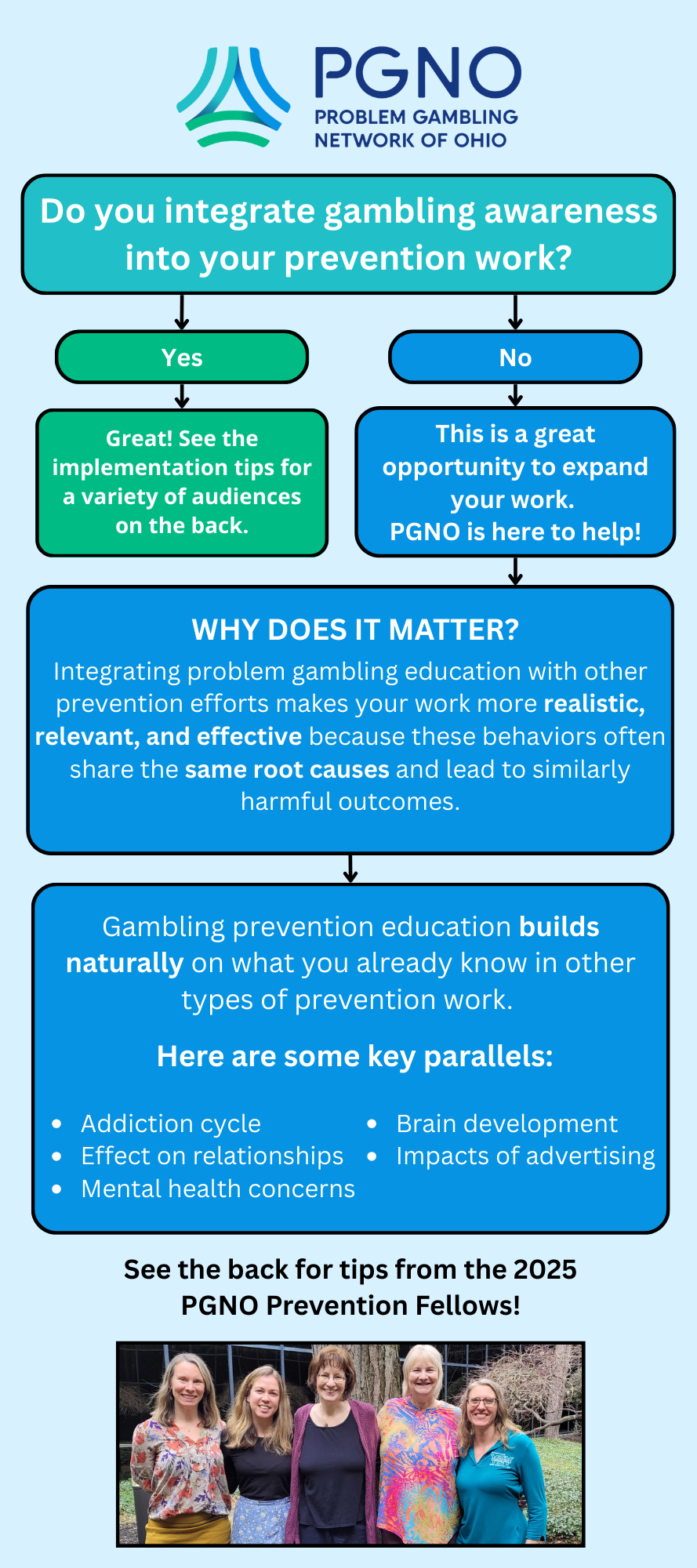
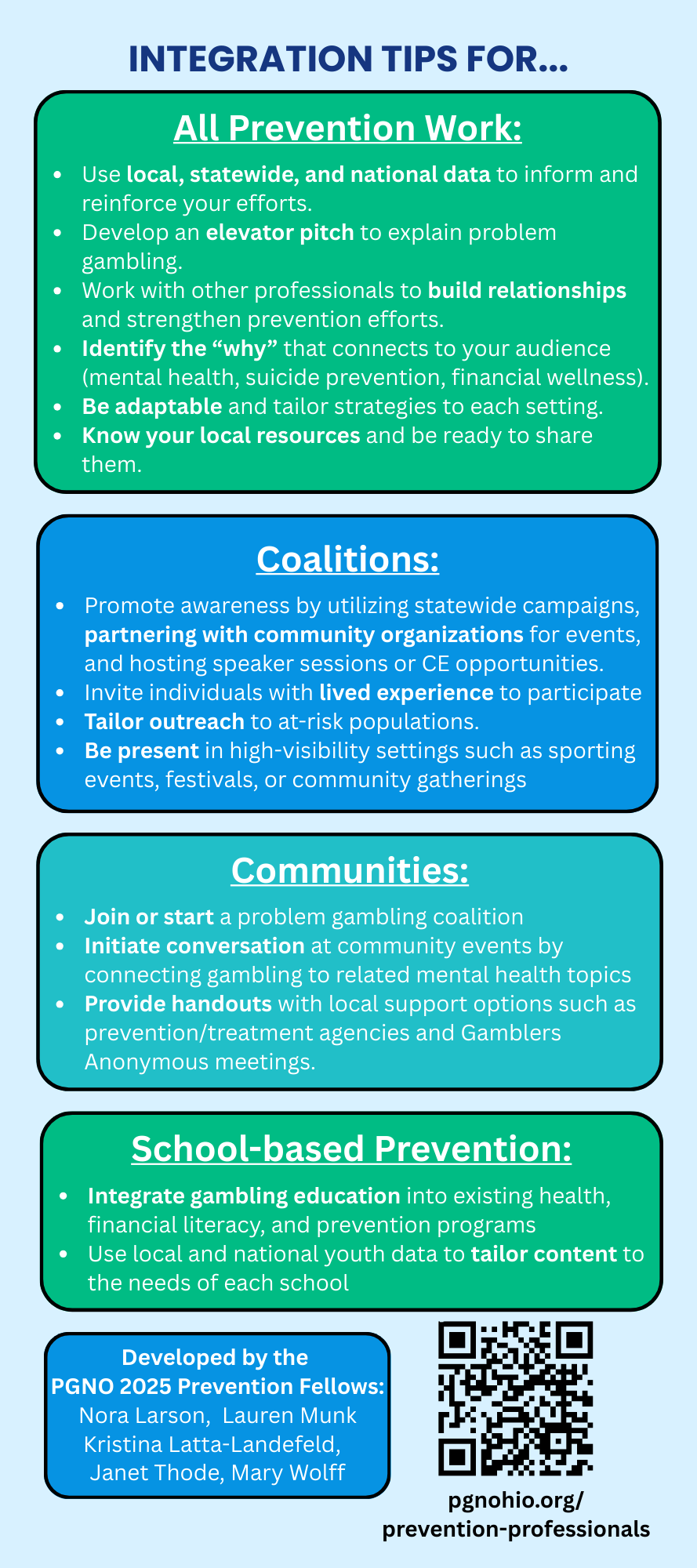
Rack Card Blurb Here

Ohio's statewide campaigns
Resource library

  • The 2022 Ohio Problem Gambling Survey provides insight into the data that was collected by Ohio Department of Behavioral Health and Ohio for Responsible Gambling in 2022 on problem gambling in Ohio. This survey is conducted every five years and shows how adults are gambling; how often they are gambling, what characteristics they have; and what characteristics may relate to gambling behaviors.
  • The OHYES! Survey is conducted by Ohio Department of Behavioral Health and provides actionable local data on youth behaviors, including gambling, and risk and protective factors. 
  • The PRIDE Survey is conducted by Prevention First! In Southwest Ohio to find the prevalence of risky behaviors in youth. Results of the Student Survey provide comprehensive descriptions of the self-reported drug use patterns of area youth. In addition to substance use/misuse, students are asked about gambling behaviors, school climate, and other factors associated with substance use/misuse.

  • A Guide to Core Competencies for Problem Gambling Prevention Professionals provides guidance on how the Core Competencies were developed, why they are important, and how they can be used to improve workforce development, assessing professional skills and goals, and more.
  • Let's Talk Risk is a guide for parents and guardians on how to discuss gambling with their children from the Massachusetts Department of Public Health. It includes resources, statistics, and activities.
  • Campus Cents is a 120-minute course, designed for college campuses, provides opportunities for interactive content and quizzes, decision-making activities, and real-life scenarios. It is divided into five modules about personal financial wellness and is designed to help students.

Do you have any resources you would like to share?