- Resources

Problem Gambling Prevention Professionals

What is Problem Gambling?

Problem Gambling is gambling behavior that is damaging to a person or their family, often disrupting their daily life and career. Anyone who gambles can be at risk for developing a gambling problem. (National Council on Problem Gambling).

What is Problem Gambling Prevention?

Problem gambling prevention  is the systematic effort to reduce the onset and impact of gambling-related harms through education, health promotion, responsible gambling practices, and early identification of risk. It draws on the same foundations used across behavioral health, including strengthening protective factors, reducing risk factors, engaging communities, and shaping environments to limit exposure to high-risk gambling.

Continuum of care
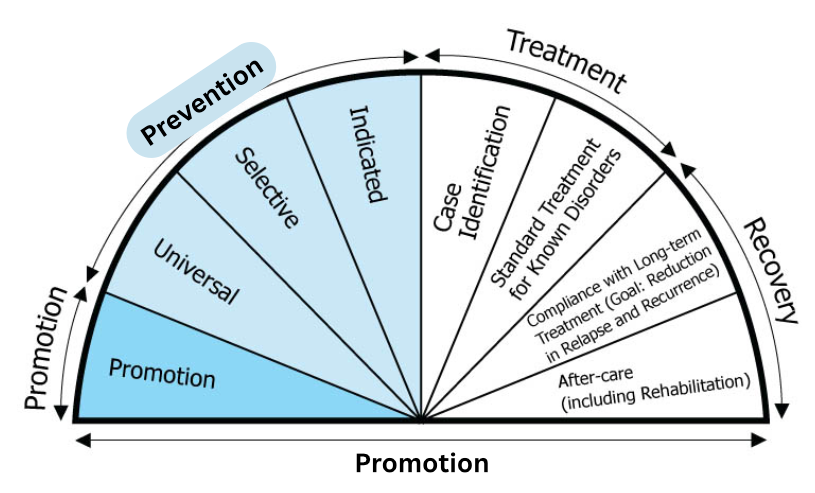
Prevention plays a critical role in the continuum of care. There are three levels of prevention. Universal prevention involves interventions delivered to the general public, regardless of individual risk such as public campaigns or education in classrooms on gambling awareness. Selective prevention involves interventions delivered to groups identified as being at greater risk than the general public. Examples include targeted school-based prevention programs and interventions for high-risk populations such as athletes or those engaged in substance use or mental health treatment. Indicated prevention involves interventions delivered to individuals experiencing early warning signs of gambling-related harm, including tabling activities on-site at a casino/racino or lottery retailer with promotion of referrals and resources for problem gambling support services.

Continuum of gambling
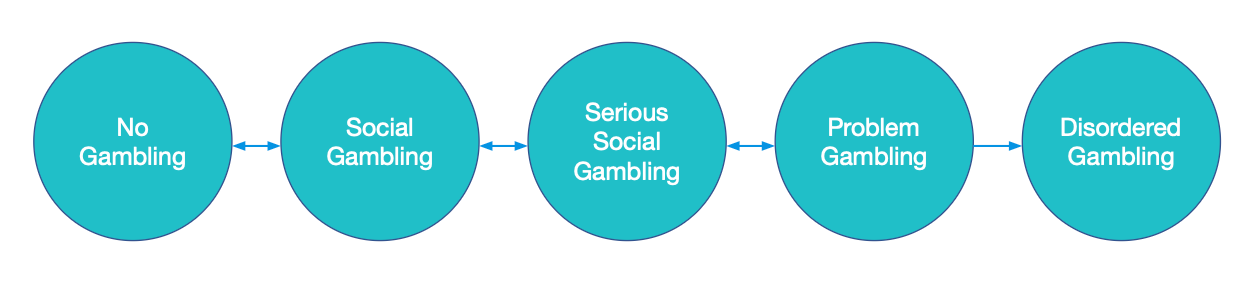
Gambling exists on a continuum ranging from no gambling to disordered gambling. No gambling is when a person does not engage in any form of gambling. Social gambling is gambling at irregular intervals for the purpose of entertainment. Someone who engages in social gambling has the ability to set limits on how much money and time they spend gambling. Serious social gambling is gambling regularly for entertainment. Problem Gambling refers to a pattern of gambling behavior that disrupts a person’s life but may not meet the full criteria for a clinical diagnosis. Gambling disorder is a more severe, clinically diagnosable condition where the person is unable to stop gambling despite its harmful effects.


Opportunities for applying prevention strategies are encouraged for individuals at different stages on the gambling continuum. For those who do not gamble, prevention efforts can focus on education about the risks of gambling and building healthy, alternative recreational activities. For those who are social or serious social gamblers, prevention efforts can be focused on providing tips and strategies for responsible gambling, setting limits, and understanding the signs of risky behavior. For those experiencing problems, interventions can include providing strategies on how to reduce harm from gambling behaviors, including brief interventions related to limit setting, responsible gambling, support groups or resource sharing. Individuals who have been identified as having a gambling disorder should be referred to specialized treatment.

when does gambling become a problem?
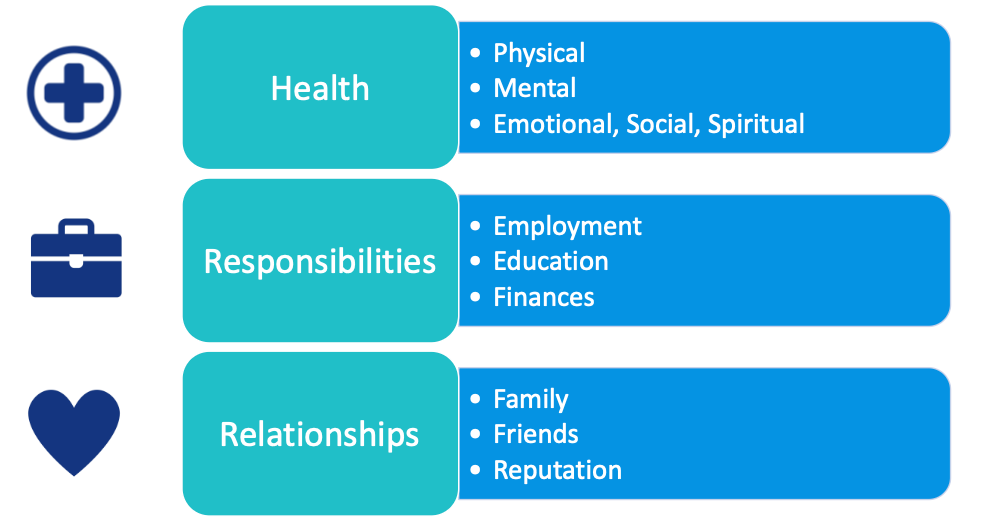
Gambling is a problem when it impacts a person’s health. This could look like a lack of sleep, stress, anxiety, depression, feelings of shame or worthlessness, high blood pressure, etc. It can also impact responsibilities resulting in missing work, school, not being able to focus on tasks, sports betting at work, etc. Problem gambling can impact relationships through financial problems, fighting over money, isolation, lying, etc.

problem gambling basics

Gambling is risking something of value on an event mostly determined by chance. While gambling is often associated with casinos or lotteries, it can take many different forms, including both traditional and online activities. This is not an exhaustive list, and new forms of gambling continue to emerge over time.


Some examples of gambling are:

  • Sports and E-sports betting
  • Casino table games (e.g., blackjack, roulette)
  • Slot machines and other electronic gaming machines
  • Lottery and scratch-off tickets
  • Prediction markets
  • Day trading
  • Bingo and keno
  • Online gambling platforms
  • Daily fantasy sports played for money
  • Poker and card games played for money
  • Social casino games played with real money
  • Betting on Horse racing 
  • Gambling-like features in video games, such as loot boxes and paid randomized rewards

Gambling in Ohio continues to change at a rapid pace. 


In 2012, casinos and racinos became legal. 11 brick and mortar locations opened throughout Ohio, which included the 7 racetracks from the 1920’s and 1930’s adding video lottery terminals (which are similar to slot machines) and 4 new casinos. 


In 2018, the world of gambling changed across the United States.


The Professional and Amateur Sports Protection Act (PASPA) was overturned by the US Supreme Court which allowed states to make their own decisions around whether they wanted to legalize sports betting.


In 2021, while sports betting was being legalized in Ohio, another bill also passed that legalized electronic bingo (or e-bingo) which can only be found inside of organizations like VFWs, Elks Clubs, etc. 


Sports Betting in Ohio launched on the universal start date of January 1, 2023 and includes betting on mobile apps, in-person at brick and mortar locations scattered across the state as well as at sports betting kiosks found at convenience stores, bowling alleys, grocery stores, bars, and restaurants.

Please visit the Timeline of Legalized Gambling in Ohio for more information.

Protective factors that promote resilience and help prevent substance use and mental health challenges also serve as protective factors against problem gambling. Broadly, these include “adaptive coping strategies, social support, spirituality or religious attendance, interpersonal skills or competence, personal autonomy or self-efficacy, and well-being or quality of life” (Dowling et al., 2021).


Individual Factors:

  • Positive social skills
  • High IQ
  • Social belonging
  • Financial Literacy
  • Healthy Coping Strategies
  • Socioeconomic Status

Family Factors:

  • Shared family activities
  • Forum to discuss issues with parents or trusted adults
  • Positive mentor in family

Peer and Social Support

  • Positive peer relationships
  • Engagement in healthy and safe activities beyond gambling

School/ Community

  • School addresses academic, social, and emotional needs
  • Provides a safe environment
  • Access to mentoring

(Dowling et al., 2017; Dowling et al., 2021 )


Age

Not only are youth more susceptible to problem gambling. There is an increased risk for men ages 18-44 and women ages 50+. (Mayo Clinic)


Early big win

When an individual wins in one of their first experiences gambling, they are at risk of becoming increasingly interested in gambling. They may develop a cognitive distortion that they are “lucky” or have false expectations of what can be earned from gambling. (Recovery Lighthouse, 2025)


Family history

Having a family member with a history of gambling disorder can impact the likelihood that an individual will experience problem gambling. (Yale Medicine)


Community acceptance and attitudes

When gambling is common and accepted among people close to an individual, especially loved ones, it can influence their behavior and contribute to gambling-related harms. (Mayo Clinic)


Availability

There are many legal ways to engage in gambling, whether physically or digitally. For example, sports betting apps increase a person's access to gambling since the app can be on their phone, wherever they go. Individuals who are surrounded by more gambling opportunities, such as casinos, lottery outlets, or online gambling platforms, experience increased risk for developing problem gambling. (University of Nebraska– Lincoln)


Adverse childhood experiences (ACEs) 

Mediating factors such as ACEs impact depression, anxiety, and impulsivity can in turn impact problem gambling (Bahri et al., 2024). 


Gambling type

Specifically, modes with a faster speed of play increase the chance of gambling harm. (Harris and Griffiths, 2017) 


Recent loss or change

When distressing events occur, such as personal loss, gambling can become a coping mechanism as people engage in more risky behaviors. A person’s gambling might “provide relief, escape and distraction” while also increasing harm (Artemi et al., 2025)


Cognitive distortions or fallacies

This could include a strong belief in superstitions or a misperception of odds. For example, belief in lucky numbers or objects, or more broadly, overestimating skill and underestimating chance. (Cowie et al., 2017)


Exaggerating wins/ understating losses

When an individual focuses on highlighting wins, rather than transparency about losses, they develop a distorted perception of their gambling rather than considering the full impact of their behavior. (Krébesz, 2023)


Alcohol and Other Drug Use

Gambling can be viewed as a way to finance substance. Alternatively, gambling while using substances can lead to poor decisions or be used to cope with the negative consequences of gambling. (Dowling et al., 2017)


Viewing gambling as a ‘safe’ alternative

People with a history of substance use may think that because gambling is legal and doesn’t cause immediate physical harm, there is less risk. Engaging in gambling as an alternative for alcohol and other drugs creates a risk for cross addiction.  (Yau YH and Potenza, 2015)

Integrating prevention efforts

In 2025, PGNO launched its inaugural Problem Gambling Prevention Fellowship, bringing together prevention professionals from across Ohio to address a common challenge in the field: how to meaningfully integrate problem gambling prevention into the work already happening in communities every day.


Before developing this tool, the Fellows created and distributed a statewide survey to prevention professionals to better understand real world experiences, needs, and barriers related to integrating problem gambling into existing prevention efforts. The feedback and insight gathered from professionals across Ohio directly informed the development of this resource.


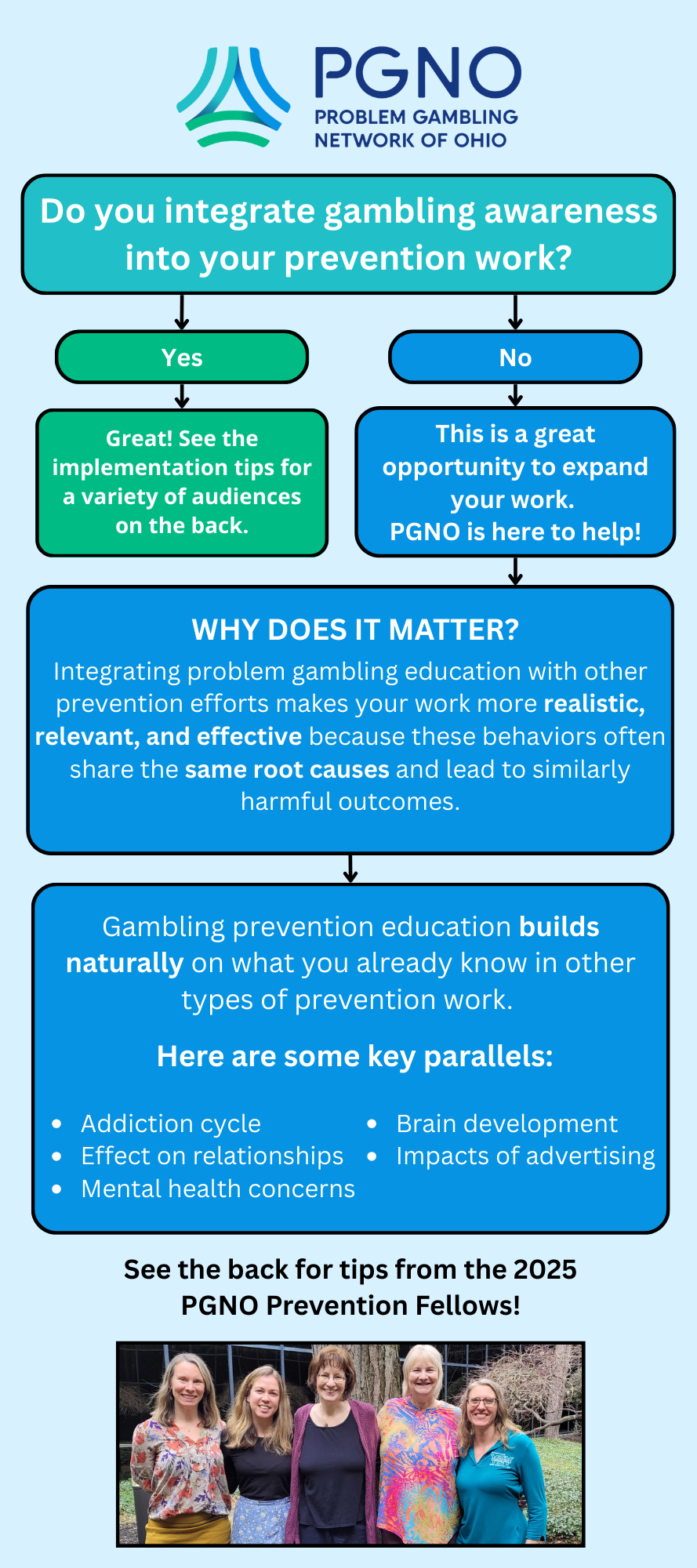
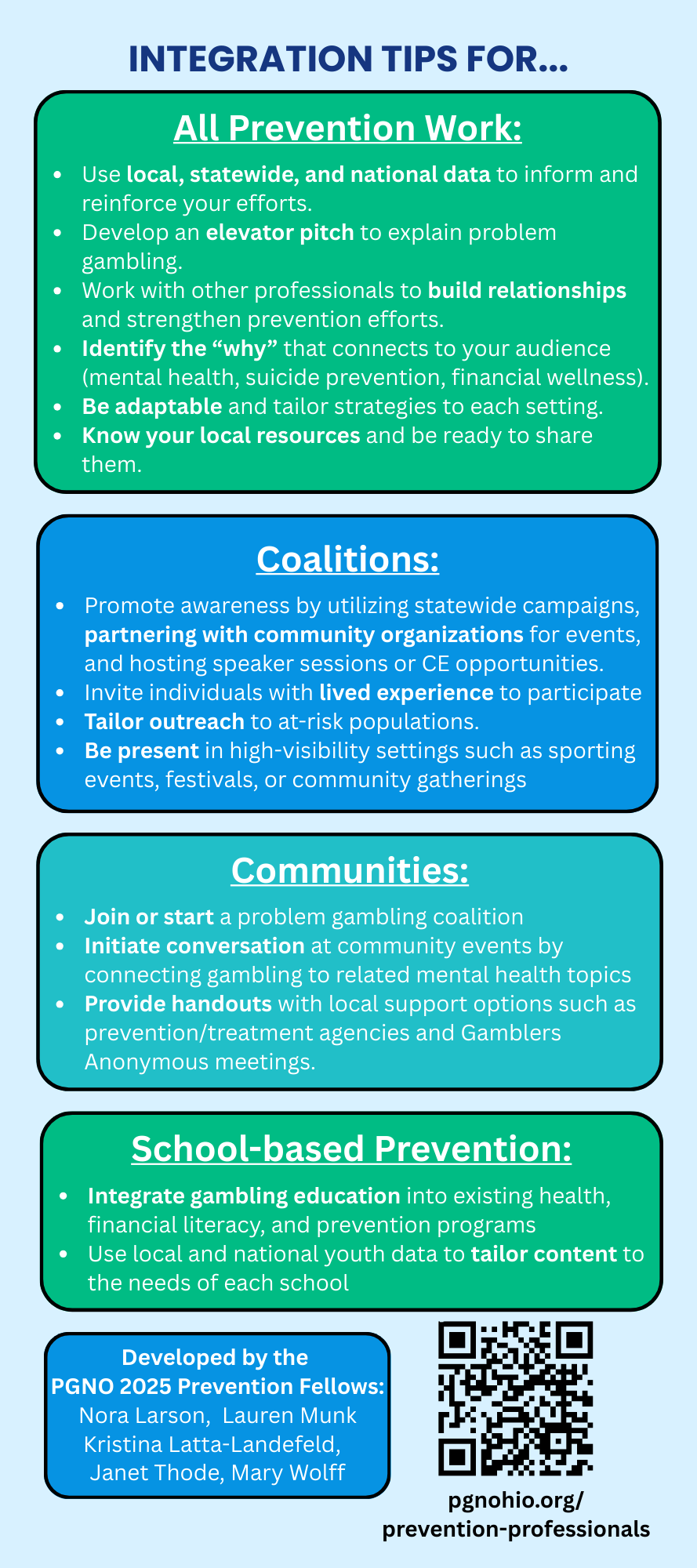
One of the tools created through this Fellowship is the Problem Gambling Integration Rack Card. Developed by prevention professionals for prevention professionals, this resource provides a practical starting point for understanding what problem gambling is and how it connects to existing prevention roles, outreach efforts, and community initiatives.


The rack card offers clear, accessible integration ideas for professionals working in general prevention, school based prevention, coalition work, and community engagement. It was designed to remove the guesswork and help professionals see that problem gambling prevention is not separate from their work, but something that can be naturally and effectively woven into what they are already doing.


This tool reflects both the real world expertise of Ohio’s prevention workforce and the collective insight shared by professionals across the state, serving as an easy reference for anyone looking to strengthen their ability to reduce gambling related harm in their community.